Tuesday, August 29, 2017

Anticipation

Always preparing for a future= anticipation. Modeling the future- an industrial, scientific, actuarial practice. A form of gambling.
Anna Zalik's work on Shell Oils Trilemma- scenarios 

Anticipation: Technoscience, Life, affect, termporality. Vicanne Adams, Michelle Murphy, Adele E Clark.

The Trilemma at left used infographics to represent series of potential futures that Shell might encounter depending upon the future changes within social, political, economic and ecological factors among others.
Proliferating forms of prediction apply to:
finance and capital accumulation
diasters
political upheaval (China)
(((China is a good case in point and typical of many states where the prevention of social upheaval in the future is the determinate factor for policy)))
(((Another modest example is Trump in his selectively timed release of "news")))

 ((( the cliff hanger))) ((( the intercut)))
self:
health:
spirituality:

As a affective state, anticipation is infused with anxiety- "Anticipation if the palpable effect of the speculative future on the present."(247) The authors explain: anticipation is a proactive way of "orienting oneself temporally." Can we say, imagining the self in a future, but that future has so many contingencies that it is impossible to actually know. Nevertheless they say we must act. (Contrast to a traditional society where there are a limited number of contingencies that can be anticipated in a future, and there are long constructed forms of knowledge and law.)

Technoscience and life- use of biomedicine, the scrutiny of genetic histories and presents with a nod to what could happen- go wrong or right in the future. Stem cell collection, collecting biological material and freezing cell lines of individuals, plants. HeLa Henrietta Lacks.
The commonplace of testing the child's gender before birth. The IRA and Roth IRA.

All revolutionary movements, all movement toward something better and the fear of something worse. How does anticipation color the present? Because the future has so much importance, anxiety proliferates and insinuates itself into many areas of daily life unrecognized, sometimes in the form of emotional affects that seem to be about something else - urgency for example as regards climate change.

Anticipation and accompanying anxiety structure the social of today; we should ask how. We should not imagine there is anything "natural" about it.
Jackie Orr (2006): Psychopolitics: states, corporations and military institutions tactically project onto subjects - producing fear
-- as if the emergency has already happened..

Anticipatory "regimes" operate through expansion.. (250)
Abduction- tacking back and forth between present and future
academics and activists too
Food production: commodity futures, emergent disease
global health regimes- anticipation of disease- HPV and other pre-emptive disease treatment. cancers of the breast
Risk is a commodity to be gambled on.. weather futures- weather derivatives

anticipating class..


'

Saturday, August 26, 2017

Mars

Mars
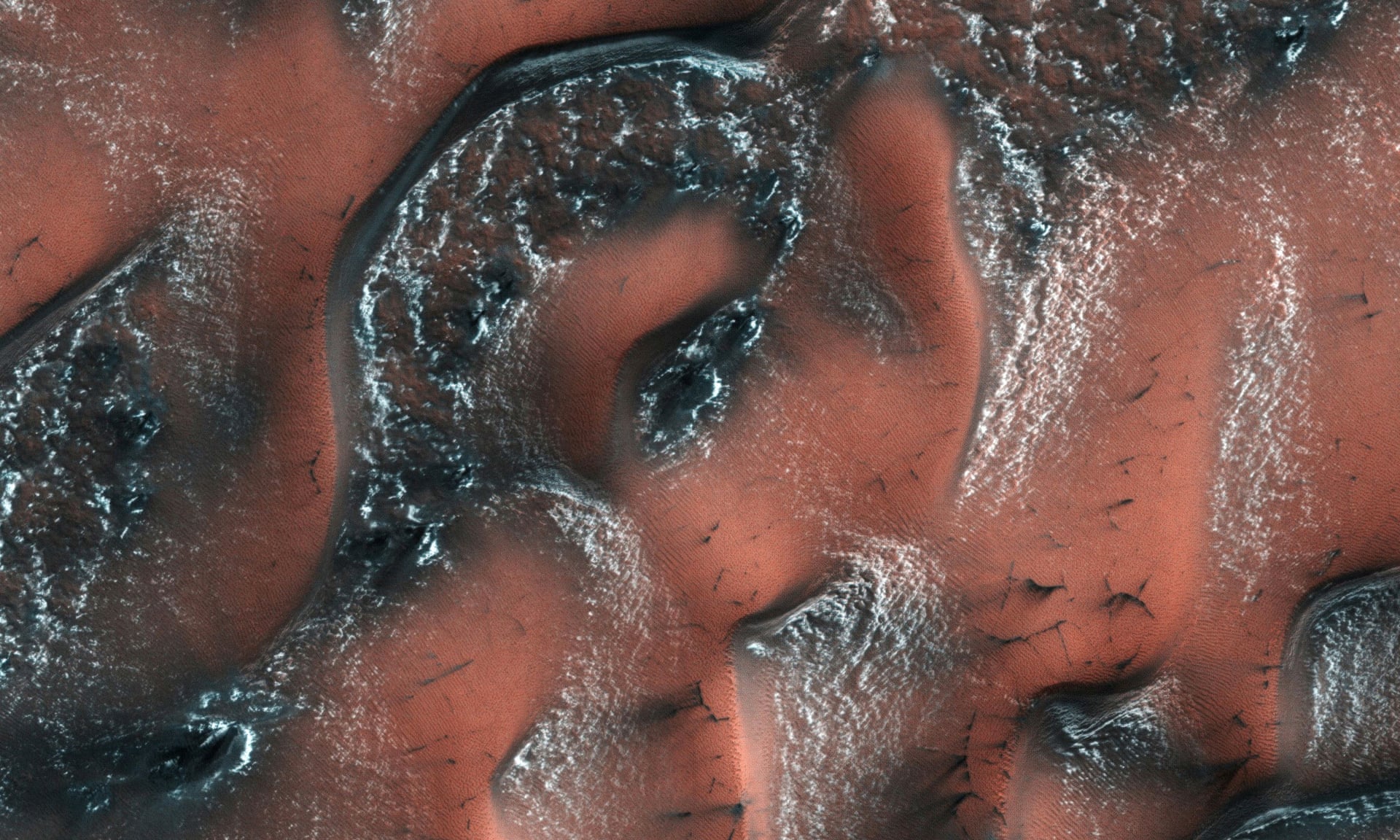
The high resolution imaging science experiment camera on Nasa’s Mars reconnaissance orbiter shows snow and ice accumulated during winter covering dunes in the northern hemisphere. Unlike on Earth, this snow and ice is carbon dioxide, better known as dry ice. When the sun starts shining on it in the spring, the ice on the smooth surface of the dune cracks and escaping gas carries dark sand out from the dune below, often creating beautiful patterns.

Photograph: NASA/AFP/Getty Images


Friday, August 25, 2017

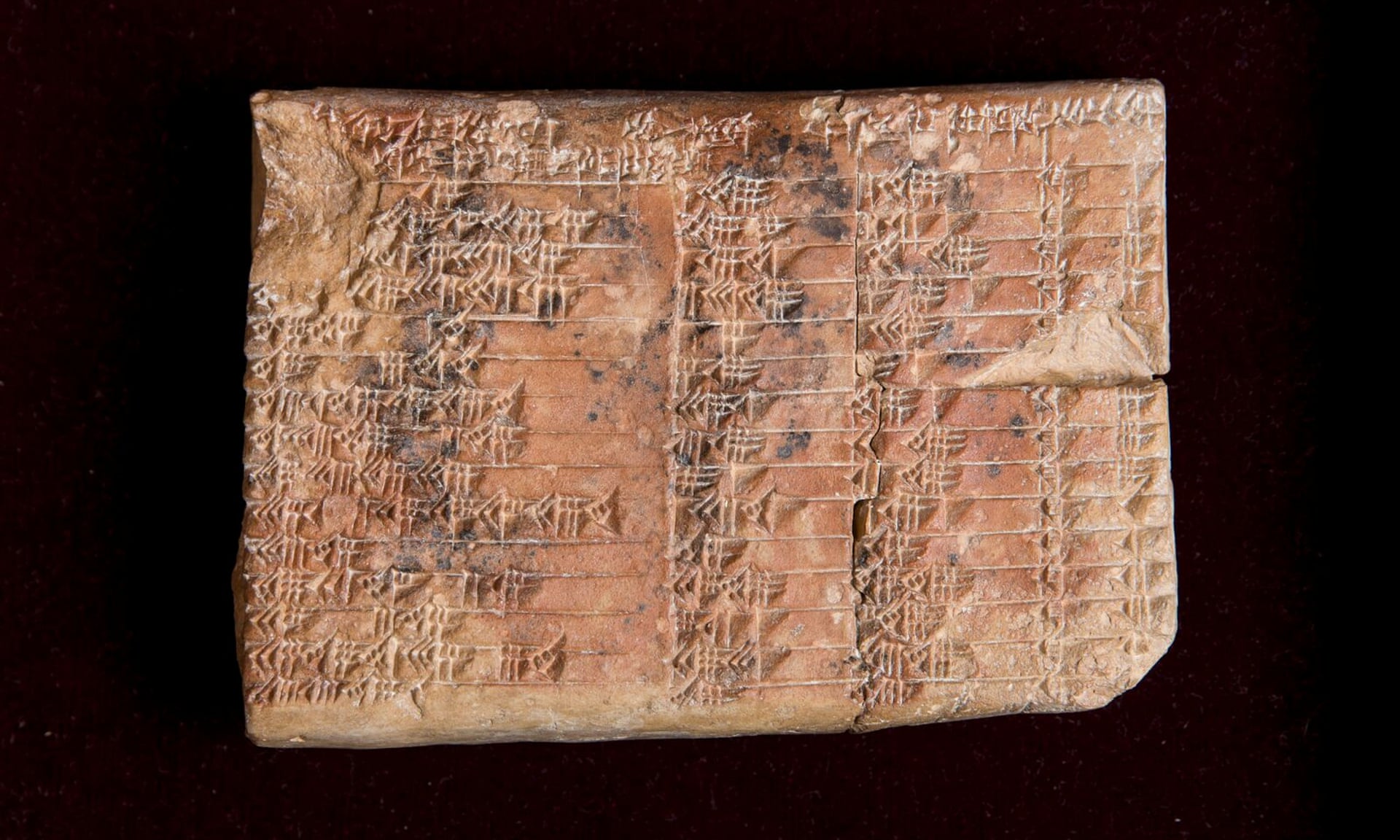
File under Afro-futurism: sophisticated knowledge of the Babylonian past

Mathematical secrets of ancient tablet unlocked after nearly a century of study

Dating from 1,000 years before Pythagoras’s theorem, the Babylonian clay tablet is a trigonometric table more accurate than any today, say researchers
from the Guardian Aug 25, 2017


Tuesday, August 22, 2017

Buhua animations


on utopia by Mieville

The Limits of Utopia

Dystopias infect official reports.
The Intergovernmental Panel on Climate Change (IPCC) demands a shift in our emissions by a third to avoid utter disaster. KPMG, in the leaden chattiness of corporate powerpoint-ese, sees the same horizon. NASA part-funds a report warning that systemic civilizational collapse ‘is difficult to avoid.’
We may quibble with the models, but not that the end of everything is right out there, for everyone to discuss.
The stench and blare of poisoned cities, lugubrious underground bunkers, ash landscapes... Worseness is the bad conscience of betterness, dystopias rebukes integral to the utopian tradition. We hanker and warn, our best dreams and our worst standing together against our waking.
Fuck this up, and it’s a desiccated, flooded, cold, hot, dead Earth. Get it right? There are lifetimes-worth of pre-dreams of New Edens, from le Guin and Piercy and innumerable others, going right back, visions of what, nearly two millennia ago, the Church Father Lactantius, in The Divine Institutes, called the ‘Renewed World’. 
[T]he earth will open its fruitfulness, and bring forth the most abundant fruits of its own accord; the rocky mountains shall drop with honey; streams of wine shall run down, and rivers flow with milk; in short, the world itself shall rejoice, and all nature exult, being rescued and set free from the dominion of evil and impiety, and guilt and error.
And it’s never only the world that’s in question: for Lactantius, as for all the best utopias, it’s humanity too. The world will rejoice because we at last will be capable of inhabiting it, free from the evil and impiety and guilt and error with which we’ve excoriated it. The relationship between humanity and what we’d now call the environment will be healed.
But so rich a lineage has hardly stopped countless environmentalisms from failing, not merely to change the world, but to change the agenda about changing the world.
We who want another, better Earth are understandably proud to keep alternatives alive in this, an epoch that punishes thoughts of change. We need utopias. That’s almost a given in activism. If an alternative to this world were inconceivable, how could we change it?
But utopia has its limits: utopia can be toxic. 
What price hopelessness, indeed? But what price hope?

Friday, August 11, 2017

What's the point if we can't have fun

What's the point if we can't have fun

“All animals play,” June had once said to me. “Even ants.” She’d spent many years working as a professional gardener and had plenty of incidents like this to observe and ponder. “Look,” she said, with an air of modest triumph. “See what I mean?”
Most of us, hearing this story, would insist on proof. How do we know the worm was playing? Perhaps the invisible circles it traced in the air were really just a search for some unknown sort of prey. Or a mating ritual. Can we prove they weren’t? Even if the worm was playing, how do we know this form of play did not serve some ultimately practical purpose: exercise, or self-training for some possible future inchworm emergency?
This would be the reaction of most professional ethologists as well. Generally speaking, an analysis of animal behavior is not considered scientific unless the animal is assumed, at least tacitly, to be operating according to the same means/end calculations that one would apply to economic transactions. Under this assumption, an expenditure of energy must be directed toward some goal, whether it be obtaining food, securing territory, achieving dominance, or maximizing reproductive success—unless one can absolutely prove that it isn’t, and absolute proof in such matters is, as one might imagine, very hard to come by.
I must emphasize here that it doesn’t really matter what sort of theory of animal motivation a scientist might entertain: what she believes an animal to be thinking, whether she thinks an animal can be said to be “thinking” anything at all. I’m not saying that ethologists actually believe that animals are simply rational calculating machines. I’m simply saying that ethologists have boxed themselves into a world where to be scientific means to offer an explanation of behavior in rational terms—which in turn means describing an animal as if it were a calculating economic actor trying to maximize some sort of self-interest—whatever their theory of animal psychology, or motivation, might be.
That’s why the existence of animal play is considered something of an intellectual scandal. read the rest

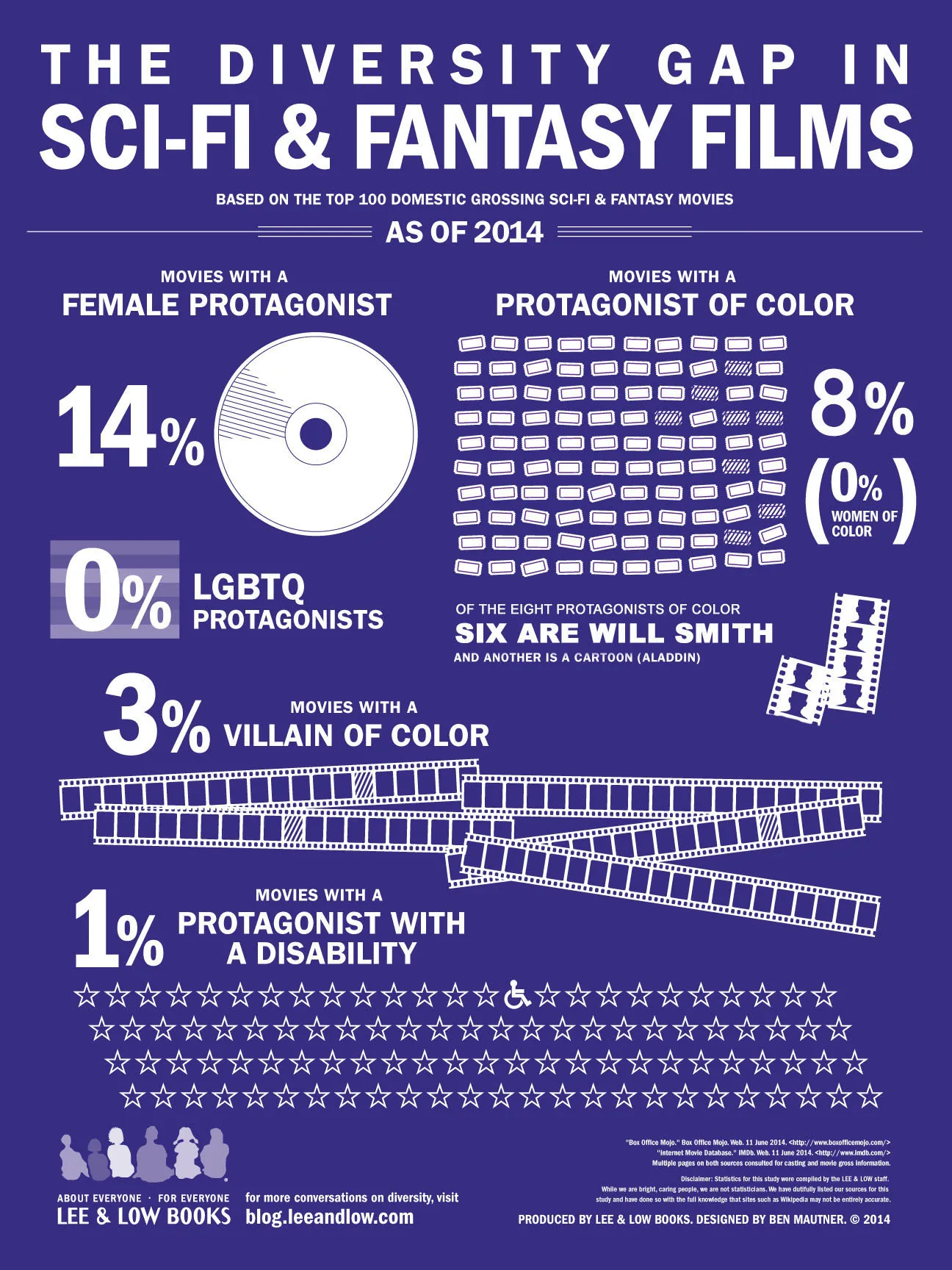
Diversity gap in sci-fi and fantasy films


Monday, August 7, 2017

72nd anniversary of the bombing of Hiroshima

What is more unreal than the damage done by the nuclear bomb? 

Today is the 72nd anniversary of the bombing of Hiroshima. Three days later the US dropped the third atomic bomb detonated on earth on Nagasaki. Twenty-two years ago I wrote down the story this woman told, slowly, haltingly, in English, about when she was 13 years old that day in Nagasaki.
-Rebecca Solnit

The city was a flat sea in flames
and the dust from the sky
is complete
Sky is black
That time we don't feel anything.
Not fear
[she had a nail in her foot]
I do not feel pain
Nearby we have a big pan full of water
When I looked, no water, none, no fish
Under the house they are screaming Help me, help me
but there is no way I can help them.
Some of them they crawl because foot is smashed
And on the way is dead I had to pass one by one
After three days is smell....
from the dead people,
Even the clothes, even the money smell for long after
You could wash yourself, you smell
They bring body, part of body, and cremate it in open sky
and I hear that noise, I can't forget that noise---
excuse me but like a barbeque.
I couldn't touch the meat for many years.
Every time I see--I don't want to remember--but after fifty years I say, If I don't tell them who will?
I lose six members of my family and I can't cry, I am in shock, I say maybe it was burned, that's why I can't cry
[burnt man full of maggots screaming Help, please kill me]
some like mummy
and the skeleton all over the place
One time I find a string
My mother says don't touch
Now I think it was intestine
I had no shoes--because was inside the house
So we have to tear up our clothes to walk
I was drinking the dirty water because we had no water--no food, no medicine
Next thing I see body floating down towards me in the water
Most of the half-burned body is that way--eyes open, surprised
I don't even know how long I survive. Maybe tomorrow. Of course I have scar on side back arm
Doesn't show face leg
[man blackened exiting train, frozen in place, inside the train sitting there--of courses all dead, black burned]
It was so hot
Nagasaki is so hot.
But we can't make it
We are so sick
Infection from nail, spent one night in bamboo then decide to go back to grandmother's home
The Americans coming so we [young girls] all have to cut hair
but I no cut hair
Every time you comb like this hair comes out
gum start losing teeth start losing
I was so skinny, my grandmother could pick it [me?] up
My cousins started dying one by one
They die
They didn't have big scar, they die from radiation symptoms
They start vomiting
It is black, black
The plutonium in Nagasaki is different
Whatever comes out is black.
Grandmother took us to hospital but they say we cannot help you
We stayed there in the hospital
My mother starts getting very sick
pimple spots all over stomach is bloated
Every day she is by the train: Father come home
Of course he didn't come
And her condition was so bad that no one would go near....
smell like decay
from her nose it looks like black oil comes out
Whatever comes out is turned to black
I don't understand it
Uncle took back to his my grandmother's home
and on the way she drink the spring water
and she say
delicious
and those were her last words.
Then she was at peace
She had been in hell.
When I saw those bones I thought, I said
Am I living
or am I dreaming,
in other world
and that's why I am here speaking.

Sweetwater Foundation

Sweetwater foundation https://grist.org/article/emmanuel-pratt-macarthur-genius-sweet-water-chicago/