Sunday, September 24, 2017

Wednesday, September 20, 2017
QUEER ECOLOGY
as a different way of thinking ecology, one possible visual concept is mesh or meshing.
Mesh is what keeps us
together- is a plethora of intersections.
Mesh has strands that connect
and it also has holes.
“Ecological humiliation”
heterosexism and binary
gender expression are not universal – in other life forms
there is lots of gayness, of
hemophrodites and other expressions
also play (bonobos)
When we think of sexuality as
binary, it perpetrates violence
Queer ecology allows for the
blurring of distinctions between genetic expressions
RNA and DNA are life
machines—they operate in some ways like viruses, going through their programs.
Strange stranger= the one
that doesn’t ever become familiar. They are alien and familiar at same time.
Like when you look at a close
old friend or spouse and you go.. wow you are so weird looking.. even after
years.. or you realize you will never know that being.. they will never be the
same as you… they will always be strange or alien.
“recognizing the multiplicity
of difference”
difference is everywhere
the collectivity is also
strange; not just the individual
we don’t have the capacity to
do that because we have not encountered it; therefore how do we return those
rights to the other(s).
we have multiple ways to
associate; there is never just one way to produce relations. To have
relationality (kinship as Haraway and indigenous people would say)
weakness over mastery..
we are always desiring…
individuals.. machines..
project of queer ecology.. we
will never be there.. we are not there yet..
structural problems cannot be
fixed by solution oriented processes. (why? Because we do not have the capacity
to understand enough of it to not fuck it up worse.. )
desire to get closer is
important however, even if we can’t get there..
Masculinity as a hierarchical
order and value has consequences because it carries along a normative
neutrality that is a fiction
“leave no trace” impossible..
there is always a trace.. the humans have interrelatedness and impact no matter
what (but you can still pick up your litter)
“dark ecology” (Morton):
a realistic ecology that removes
cultural ideas of nature.
Queer, changing,
interrelated.
Meshlike, interactive
Start with an
overappreciation of another’s enjoyment beyond your tolerance
Tuesday, September 19, 2017
The three Goddesses of Black Speculative Fiction
Goddesses! Jewell Gomez, Nnedi Okorafor and Nalo Hopkinson are so dubbed by John Jennings at the 2016 Black Comix Arts Festival. Watch the interview below.
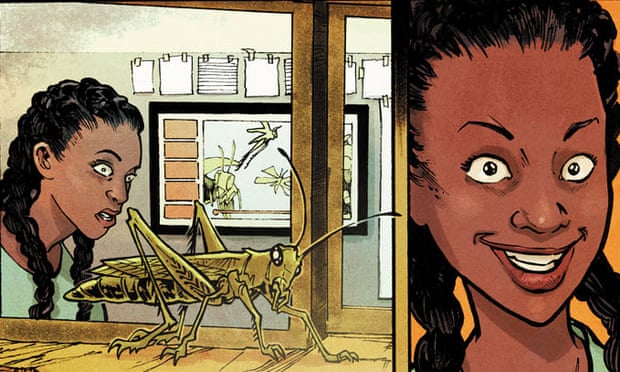
Nnedi Okorafor’s Marvel comic featuring the superhero, Ngozi.
‘So many different types of strange’: how Nnedi Okorafor is changing the face of sci-fiArticle in the Guardian about Nnedi Okorafor: follow the link
With a Marvel comic under her belt and a novel being adapted for TV by HBO, the Nigerian-American writer is flying the flag for black, female geeks
Interview with Nalo Hopkinson
Interview with Hopkinson
Interview with Nalo Hopkinson
Interview with Hopkinson
Tuesday, September 12, 2017


Posthumanism
Can a new kind of humanities—posthumanities—respond to the redefinition of humanity's place in the world by both the technological and the biological or "green" continuum in which the "human" is but one life form among many? Exploring this radical repositioning, Cary Wolfe ranges across bioethics, cognitive science, animal ethics, gender, and disability to develop a theoretical and philosophical approach responsive to our changing understanding of ourselves and our world.
What Is Posthumanism? is an original, thoroughly argued, fundamental redefinition and refocusing of posthumanism. Firmly distinguishing posthumanism from discourses of the ‘posthuman’ or ‘transhumanism,’ this book will be at the center of discussion for a long time to come.
—
Donna Haraway, author of When Species Meet
Above is a definitional work exploring implications of post (belong) or trans (transcending) humanism. We can also explore our own expectations of this term as well as our experiences.
Another important analysis was written by Katherine Hayles: This study engages less in the questions of embodiment itself and its ethical positioning and more on the emergence of this new technologized construction of the human as becoming integrated with and penetrated by systems of information exchange.
How We Became Posthuman
VIRTUAL BODIES IN CYBERNETICS, LITERATURE, AND INFORMATICS


364 pages | 5 line drawings | 6 x 9 | © 1999
Posthumanism or post-humanism (meaning "after humanism" or "beyond humanism") is a term with at least seven definitions according to philosopher Francesca Ferrando:[1]
- Antihumanism: any theory that is critical of traditional humanism and traditional ideas about humanity and the human condition.[2]
- Cultural posthumanism: a branch of cultural theory critical of the foundational assumptions of humanism and its legacy[3] that examines and questions the historical notions of "human" and "human nature", often challenging typical notions of human subjectivity and embodiment[4] and strives to move beyond archaic concepts of "human nature" to develop ones which constantly adapt to contemporary technoscientificknowledge.[5]
- Philosophical posthumanism: a philosophical direction which draws on cultural posthumanism, the philosophical strand examines the ethical implications of expanding the circle of moral concern and extending subjectivities beyond the human species[4]
- Posthuman condition: the deconstruction of the human condition by critical theorists.[6]
- Transhumanism: an ideology and movement which seeks to develop and make available technologies that eliminate aging and greatly enhance human intellectual, physical, and psychological capacities, in order to achieve a "posthuman future".[7]
- AI takeover: A more pessimistic alternative to transhumanism in which humans will not be enhanced, but rather eventually replaced by artificial intelligences. Some philosophers, including Nick Land, promote the view that humans should embrace and accept their eventual demise.[8] This is related to the view of "cosmism" which supports the building of strong artificial intelligence even if it may entail the end of humanity as in their view it "would be a cosmic tragedy if humanity freezes evolution at the puny human level".[9][10][11]
- Voluntary Human Extinction, which seeks a "posthuman future" that in this case is a future without humans.
Automation and labor as a science fiction theme
from Wikipedia: "With Folded Hands ..." is a 1947 science fiction novelette by American writer Jack Williamson. Willamson's influence for this story was the aftermath of World War II and the atomic bombing of Hiroshima and Nagasakiand his concern that "some of the technological creations we had developed with the best intentions might have disastrous consequences in the long run."[1]

1) A robot may not injure a human being or, through inaction, allow a human being to come to harm
2) A robot must obey orders givein to it by human beings except where such orders would conflict with the First Law.
3) A robot must protect its own existence as long as such protection does not conflict with the First or Second Law.
In a 1991 interview, Williamson revealed how the story construction reflected events of his childhood in addition to technological extrapolations:
From Isaac Asimov's "I Robot" The three laws of Robotics:1) A robot may not injure a human being or, through inaction, allow a human being to come to harm
2) A robot must obey orders givein to it by human beings except where such orders would conflict with the First Law.
3) A robot must protect its own existence as long as such protection does not conflict with the First or Second Law.
Tuesday, September 5, 2017
Themes in Dawn by Octavia Butler
- consent: nobody seemed to believe in it- there was what we would call rape- Nikanj uses tentacles..
non-cons-tenticle- kinky sex
- Exchange-
- drugging
- Oolois- complicated sexuality-
- rape as ambiguous
- genocide being perpetrated-
- rape as ambiguous- often
- blackness/gendered female- rape victim
non-cons-tenticle- kinky sex
- Exchange-
- Ooloi trade selves
- but humans can't refuse to trade
- drugging
- Oolois- complicated sexuality-
- they can read what is in mind of others
- but maybe they misread
- rape as ambiguous
- genocide being perpetrated-
- but humans were already almost dead
- or were the Oankalii colonizers
- humanity-wanting to preserve humans- kind of a strike for purity
- so happy or so fucked up
- experience for Oankali can be acquired and lost- it has materiality
- domestication
- eugenics- histories of slavery..
- genetic manipulation
- uneven relationship. period.
- cancers (like another kind of character)
- attraction and disgust
- Lilith- pragmatic, strong, doesn't have leader ego
- Lilith- powerful black woman
- identities as subjects muddled(human/gender/geography/species) but not skin color
- resistance
- cooperation/noncooperation
making room for others
I love that section heading so much.
Here is an article also an audio interview on Octavia Butler
Octavia Butler: Writing herself into the story

Octavia Butler: Writing herself into the story

Monday, September 4, 2017
Subscribe to:
Posts (Atom)
-
LuYang Delusional Mandala by LuYang from LuYang on Vimeo .
-
I love that section heading so much. Here is an article also an audio interview on Octavia Butler Octavia Butler: Writing herself into t...

